Understanding the Thorough Manufacturing Process of Roll Off Dumpsters
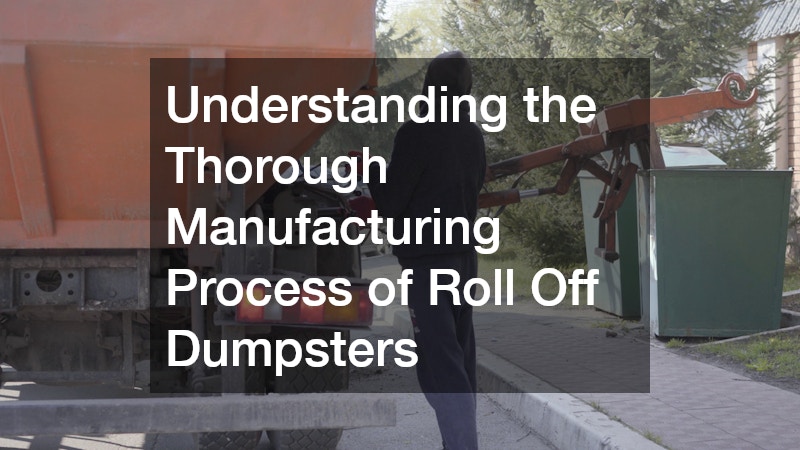
When it comes to waste management and construction projects, efficiency starts with the right equipment. Roll off waste containers are an essential component, providing a durable and convenient solution for handling large amounts of debris. While their use is widely understood, the process behind creating these heavy-duty containers is complex and meticulous. Understanding how roll off dumpsters are manufactured gives insight into the engineering, safety standards, and quality control measures that ensure their reliability on every job site.
Designing for Strength and Functionality
The manufacturing of roll off waste containers begins with careful planning and design. Engineers focus on creating containers that can withstand heavy loads, resist corrosion, and remain functional through years of repeated use.
The design phase involves calculating the dimensions, weight capacity, and the placement of key features such as lifting lugs, doors, and reinforcement ribs.
Beyond structural integrity, functionality is a top priority. Designers consider the ease of transport, the ability to efficiently load and unload waste, and compatibility with standard roll off trucks. Even minor details, such as the angle of the doors or the curvature of the container’s walls, are optimized to improve safety and convenience. This careful attention at the design stage sets the foundation for a product that can handle tough conditions while remaining reliable.
Each design is typically reviewed and revised multiple times to balance durability with cost-effectiveness. The goal is a roll off dumpster that meets operational needs without excessive weight or unnecessary material usage. Once finalized, these designs move into the fabrication phase, where precision and consistency become the focus.
Precision in Fabrication and Assembly
Once designs are complete, the fabrication process begins with high-grade steel sheets that form the body of the dumpster. Steel is chosen for its strength and resistance to wear, ensuring the container can handle abrasive materials and heavy loads. Cutting and shaping the steel involves advanced machinery, including laser cutters and press brakes, which allow for precise angles and smooth edges. Accurate fabrication is crucial to guarantee that the parts fit together perfectly during assembly.
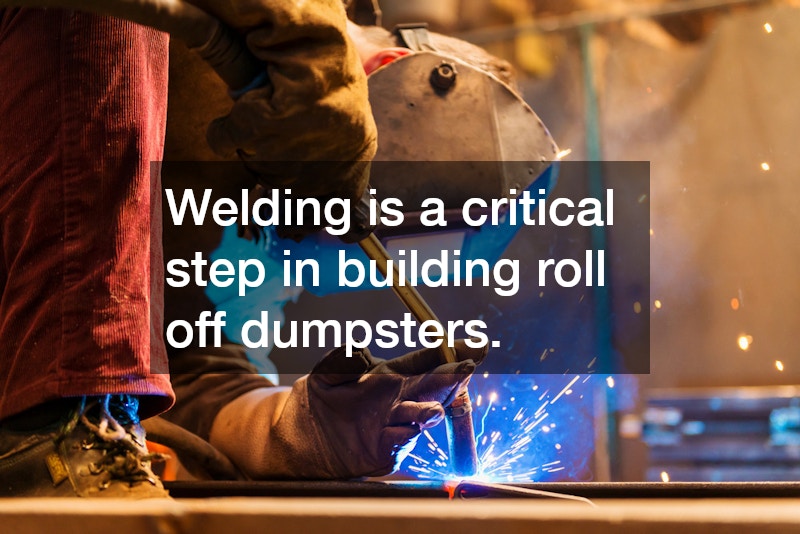
Welding is a critical step in building roll off dumpsters. Skilled technicians join the steel panels using techniques that provide uniform strength across seams, preventing weak points that could compromise the container’s integrity. Reinforcement is added in strategic locations, such as the bottom and corners, where stress is greatest during use and transport. Doors, hooks, and other operational features are installed at this stage, ensuring they function reliably under load.
After assembly, the dumpsters undergo a surface treatment to protect against rust and corrosion. This typically includes sandblasting to remove impurities and applying primer coatings, followed by a durable paint finish. This protective layer extends the lifespan of the container, making it suitable for outdoor storage and exposure to harsh weather. Each unit is carefully inspected for alignment, welding quality, and finish, ensuring that only fully compliant dumpsters proceed to testing.
Rigorous Testing and Quality Assurance
No roll off dumpster is ready for the field without thorough testing. Manufacturers subject each unit to rigorous evaluations to verify weight capacity, structural integrity, and operational functionality. Load tests simulate real-world conditions, with the container filled to maximum capacity and stressed at key points to ensure it can safely handle heavy debris. Doors, latches, and lifting mechanisms are also tested repeatedly to confirm smooth operation and durability.
Quality assurance teams inspect every weld, seam, and component to identify any potential flaws before the dumpster reaches customers. Any issues detected during testing are addressed immediately, often requiring rework or reinforcement. This commitment to quality ensures that the finished product can perform reliably in demanding applications, whether on construction sites, industrial facilities, or municipal projects.
In addition to mechanical testing, compliance with safety and environmental regulations is verified. Manufacturers ensure that roll off waste containers meet local, state, and industry standards for safety, load handling, and material usage. Documentation of inspections and tests is maintained for traceability, giving customers confidence that the containers they receive have passed stringent quality benchmarks.
The manufacturing process of roll off dumpsters combines careful design, precise fabrication, and rigorous testing to produce containers that are both strong and reliable. From the initial planning stage to the final inspection, each step is designed to ensure safety, functionality, and longevity. For businesses and municipalities relying on these containers, understanding this process highlights the engineering and quality control that go into creating equipment capable of handling the demands of waste management efficiently.